
Project AURA
This project began as a broad exploration into improving travel experiences. However, early on I helped steer our team toward a more focused opportunity: motion-induced anxiety and nausea. After sourcing and conducting an initial interview, I identified that the real breakdown wasn't just discomfort - it was the lack of timely, usable support when users were already physically compromised. Because of this, I pushed the team to move away from general travel experience ideas and instead define a clearer objective: how might we proactively support travelers through motion sickness in a way that is discreet, accessible, and requires minimal interaction?
Grounded in Research
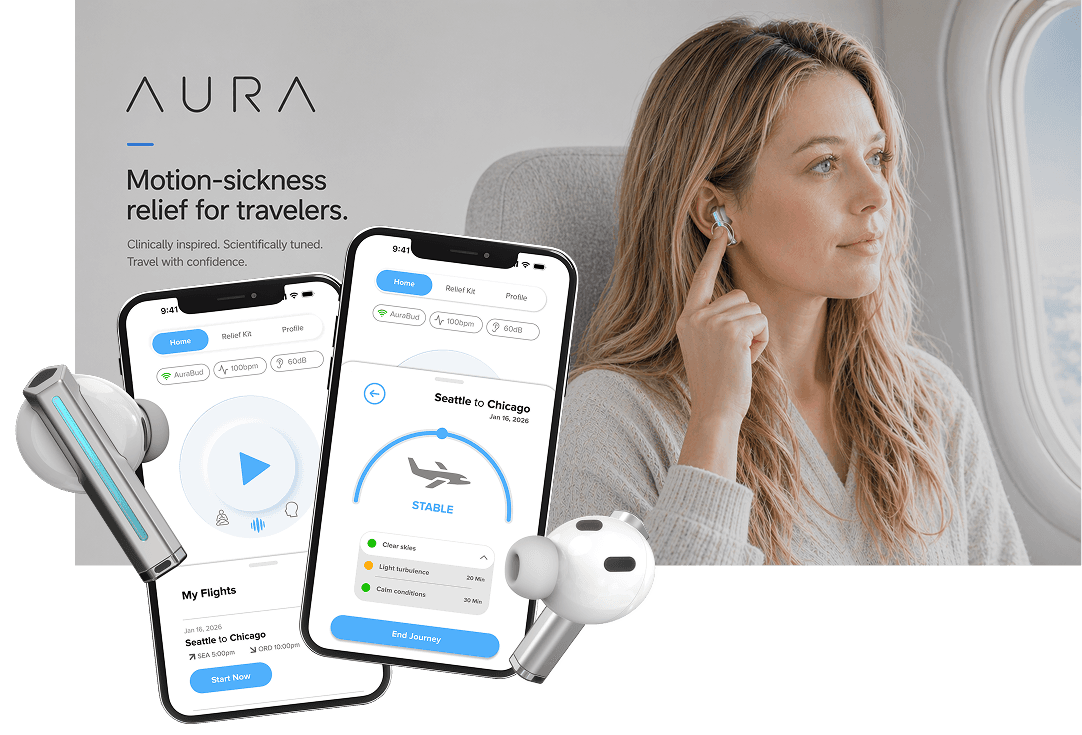
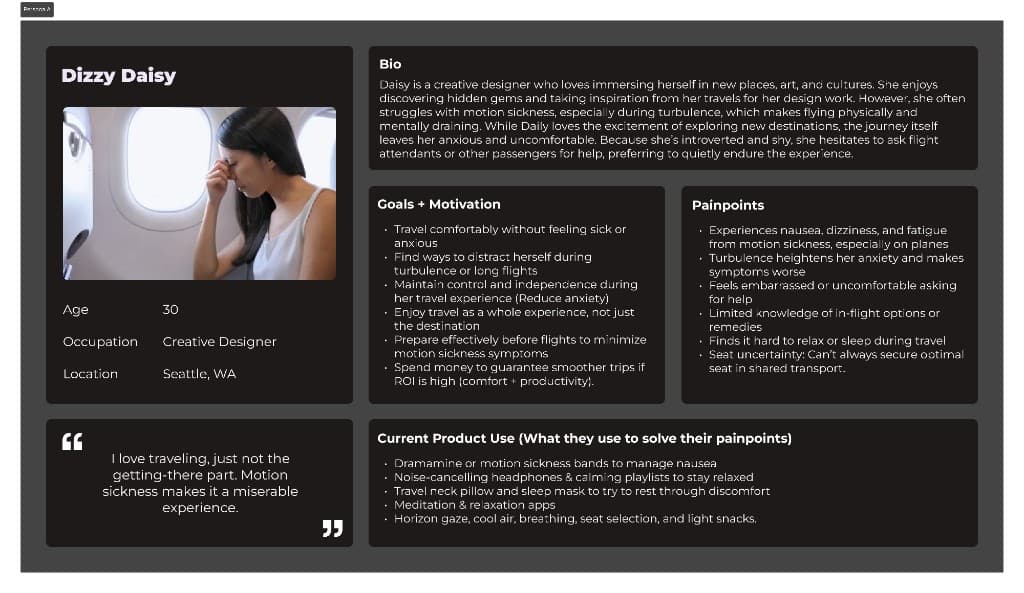
To ground this direction, I led early research synthesis by shaping personas and identifying key pain points around anticipation, accessibility, and cognitive overload. A turning point came when I discovered a Nagoya University study showing that 100 Hz sound frequencies can reduce motion sickness. This shifted our concept from a purely wearable solution to a combined hardware-software system. Because of this insight, we aligned as a team around an ear-based wearable paired with a mobile app - moving from abstract ideas into a technically plausible product direction.
An Ecosystem of Relief
As we moved into ideation, I played a central role in defining the product ecosystem and initial experience. I designed and prototyped the first version of the companion app while also influencing the wearable direction. Our early concept combined therapeutic sound delivery through earbuds with a supporting app layer for guidance. However, mid-fidelity testing revealed a major flaw: users could not reliably engage with screens while experiencing nausea. Because of this, I helped reframe the interaction model - shifting the experience toward passive, AI system-driven support rather than active user control.
Refining the Ecosystem
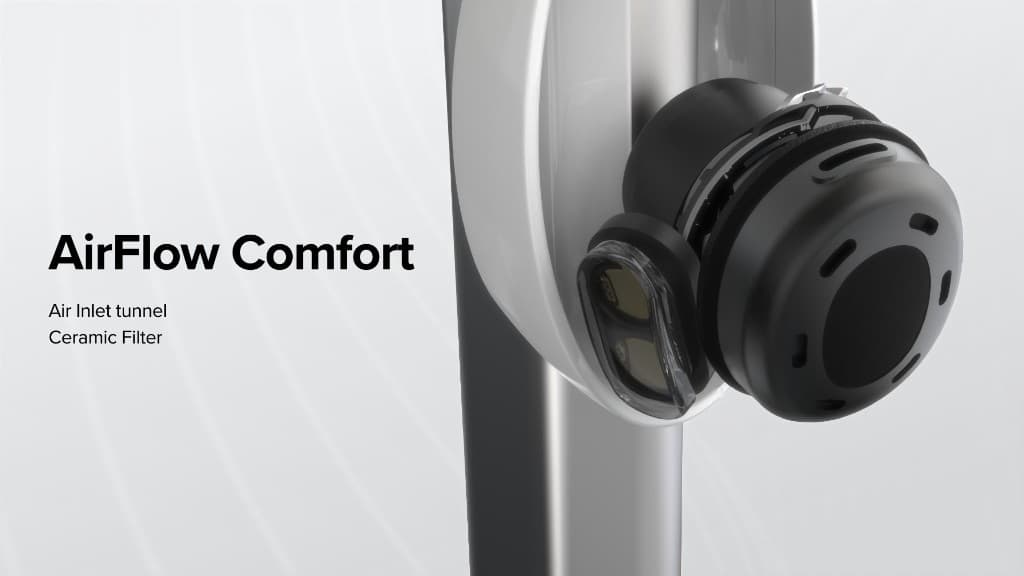
In response, I led key iterations on the digital experience, simplifying the interface into larger, more glanceable components and introducing a dial-based interaction for faster navigation. I also proposed integrating AI-driven voice guidance to reduce reliance on screens entirely. At the system level, we designed around real-world constraints like in-flight connectivity, leading to a preloaded data model that could anticipate turbulence and trigger interventions without needing internet access. In parallel, we continued testing the physical form factor, evolving from bulkier concepts into an AirPods-style earbud to improve comfort, familiarity, and wearability.
Contribution
Throughout the project, I contributed across both concept and execution, introducing the core scientific insight, designing the app experience, shaping the interaction model, and creating the branding and final storytelling assets. More importantly, my contributions influenced key team decisions: narrowing scope to flights for depth, shifting from reactive tools to proactive systems, and prioritizing accessibility under physical distress.
By the end, we delivered a cohesive wearable & app ecosystem that reframed motion sickness from something users react to, into something the system helps manage proactively. The impact of our decisions was reflected not just in the final prototype, but in how the product evolved: becoming simpler, more anticipatory, and less dependent on user effort with each iteration.
Validation
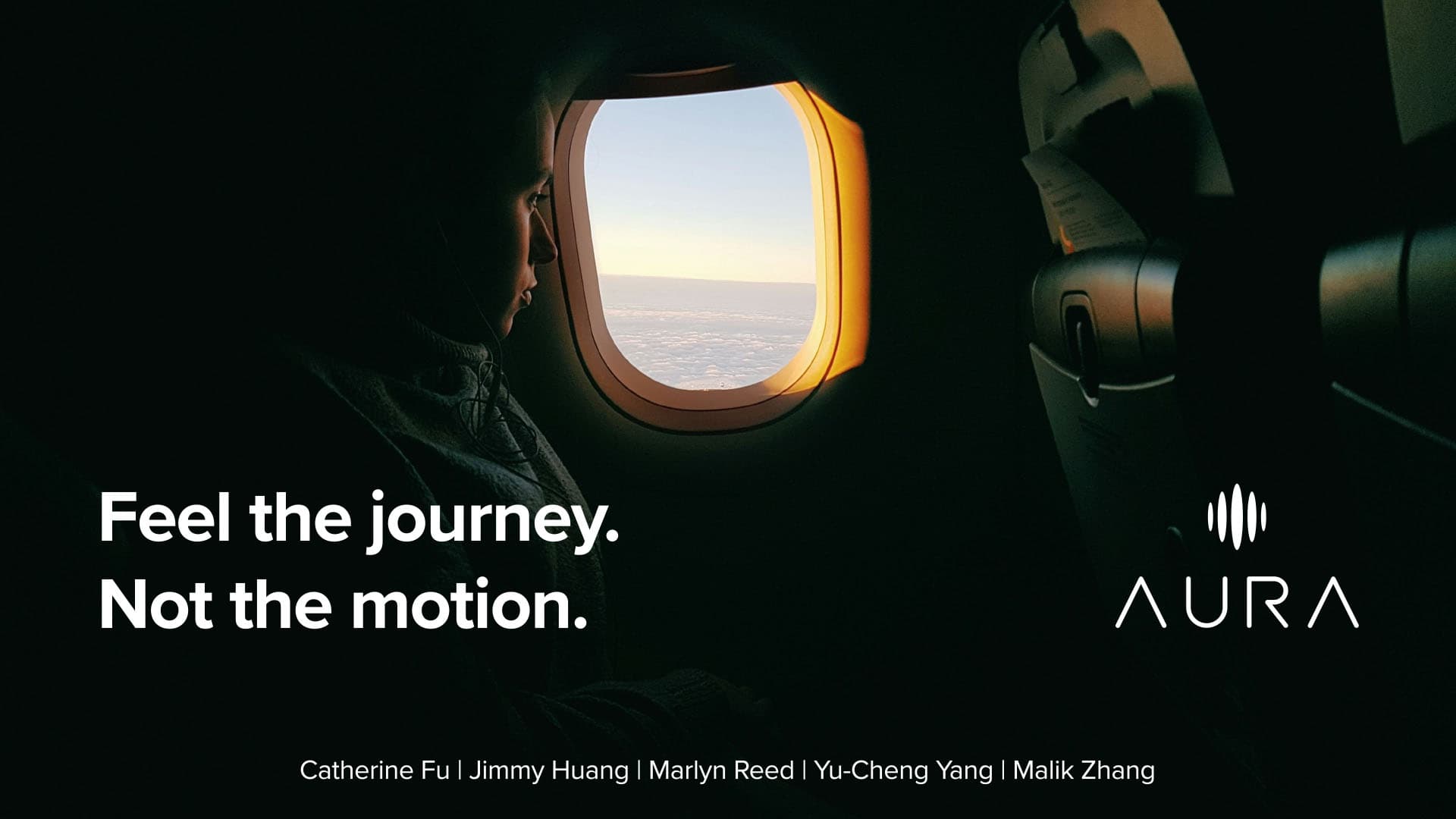
Several months after completing the project, Samsung released a strikingly similar concept through its Galaxy Buds ecosystem - an app using 100 Hz sound frequencies to alleviate motion sickness, covered by The Verge and 9to5Google. Without prior knowledge of this work, our team had independently arrived at nearly the same solution. This served as strong validation that our process - from research to iteration - led us to a direction aligned with real-world innovation, reinforcing that we were solving a meaningful and emerging problem space.