The Number 1 Complaint
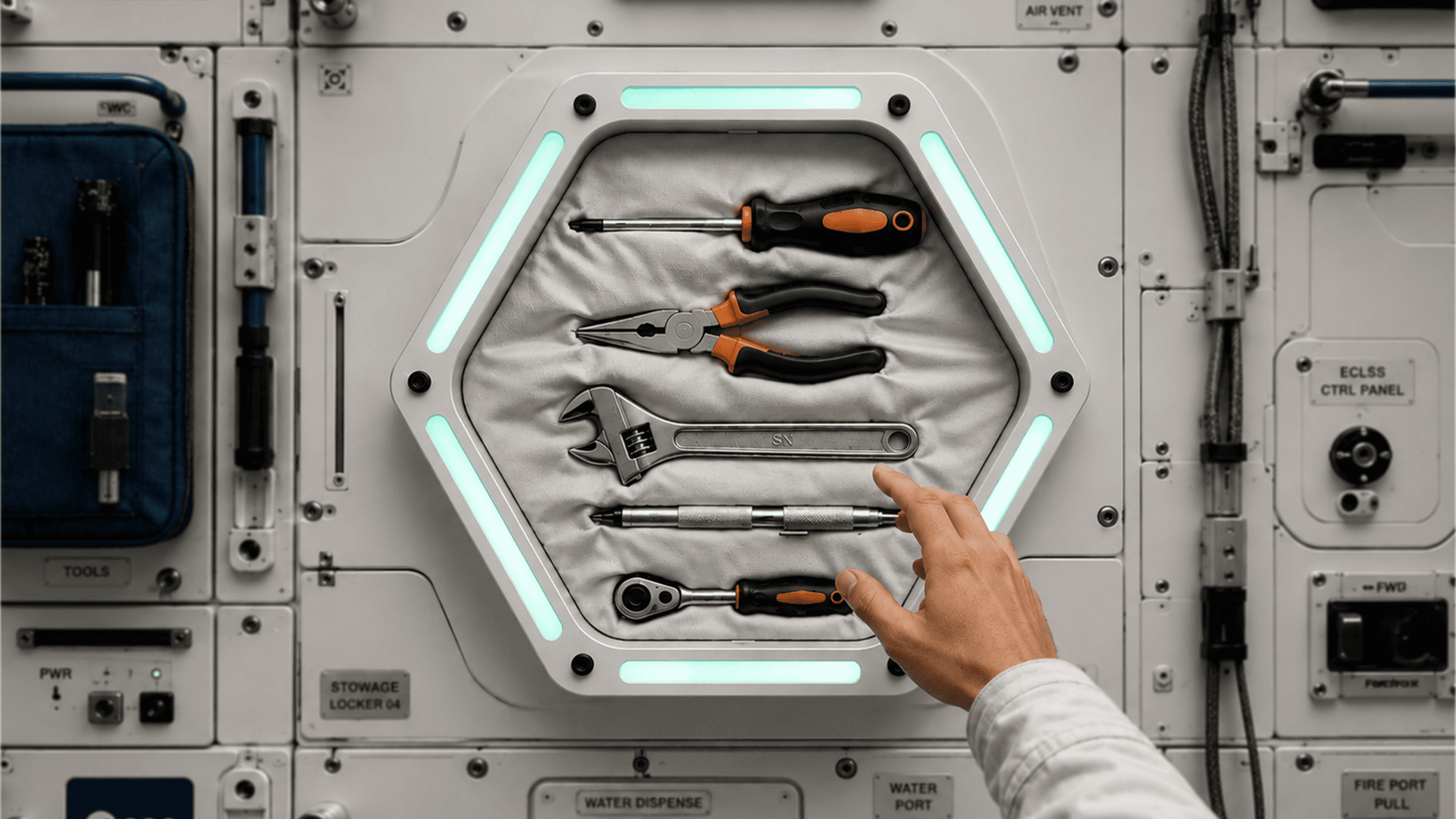
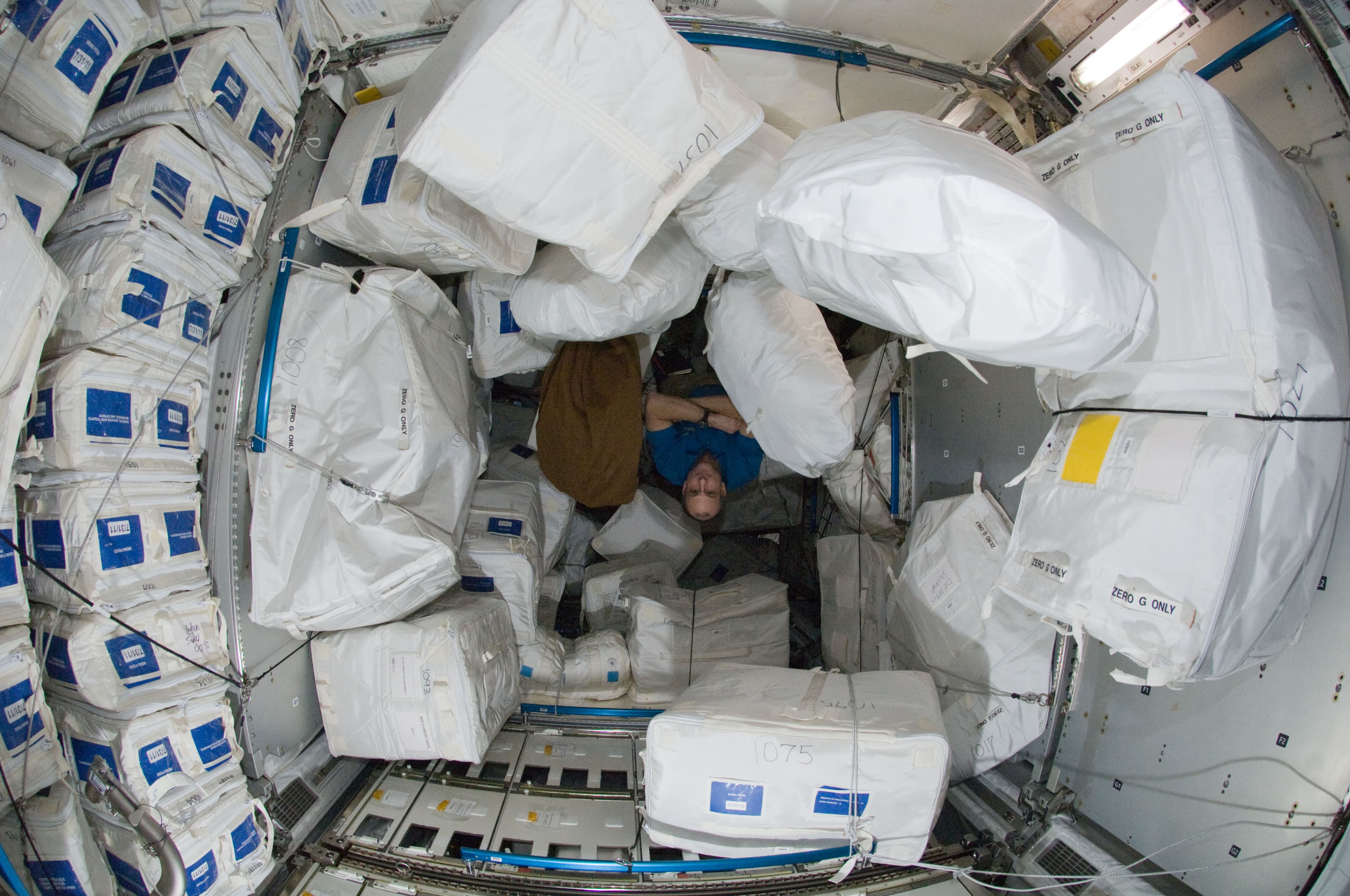
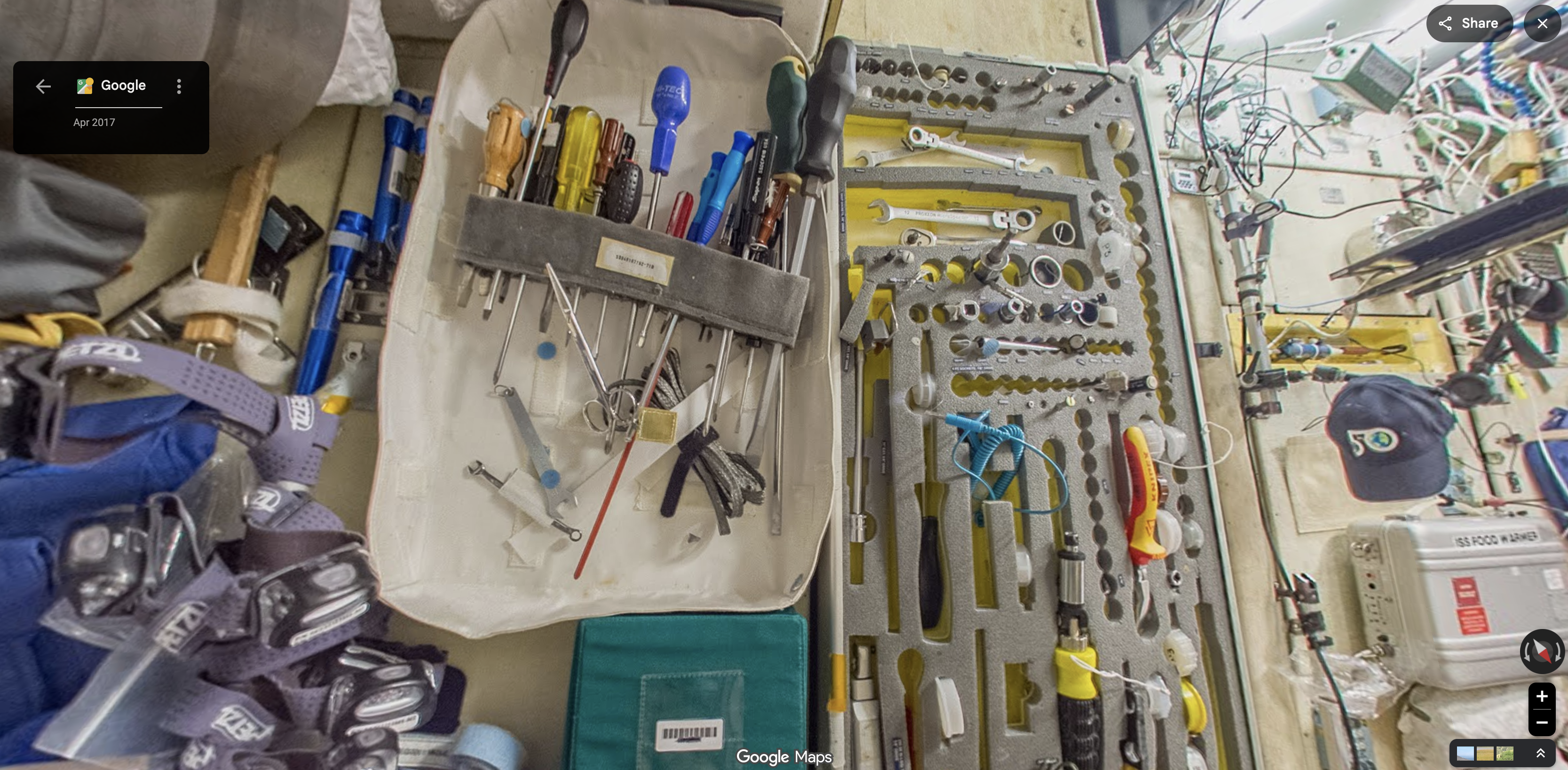
Space stowage is more than a storage problem. In microgravity, objects drift, workspaces become visually cluttered, and finding or returning a tool can interrupt an entire task. Our initial research focused on the familiar problem of "Where is the object?" - exploring how tracking systems could help astronauts locate missing tools and materials. Through desk research and expert interviews, however, we realized that location alone wasn't enough. An object's meaning changes depending on what it is being used for, who is using it, and whether a task is ongoing. This shifted our core question to: How might we make shared work in space more organized and reliable by preserving the context around objects?
A Temporary Workspace
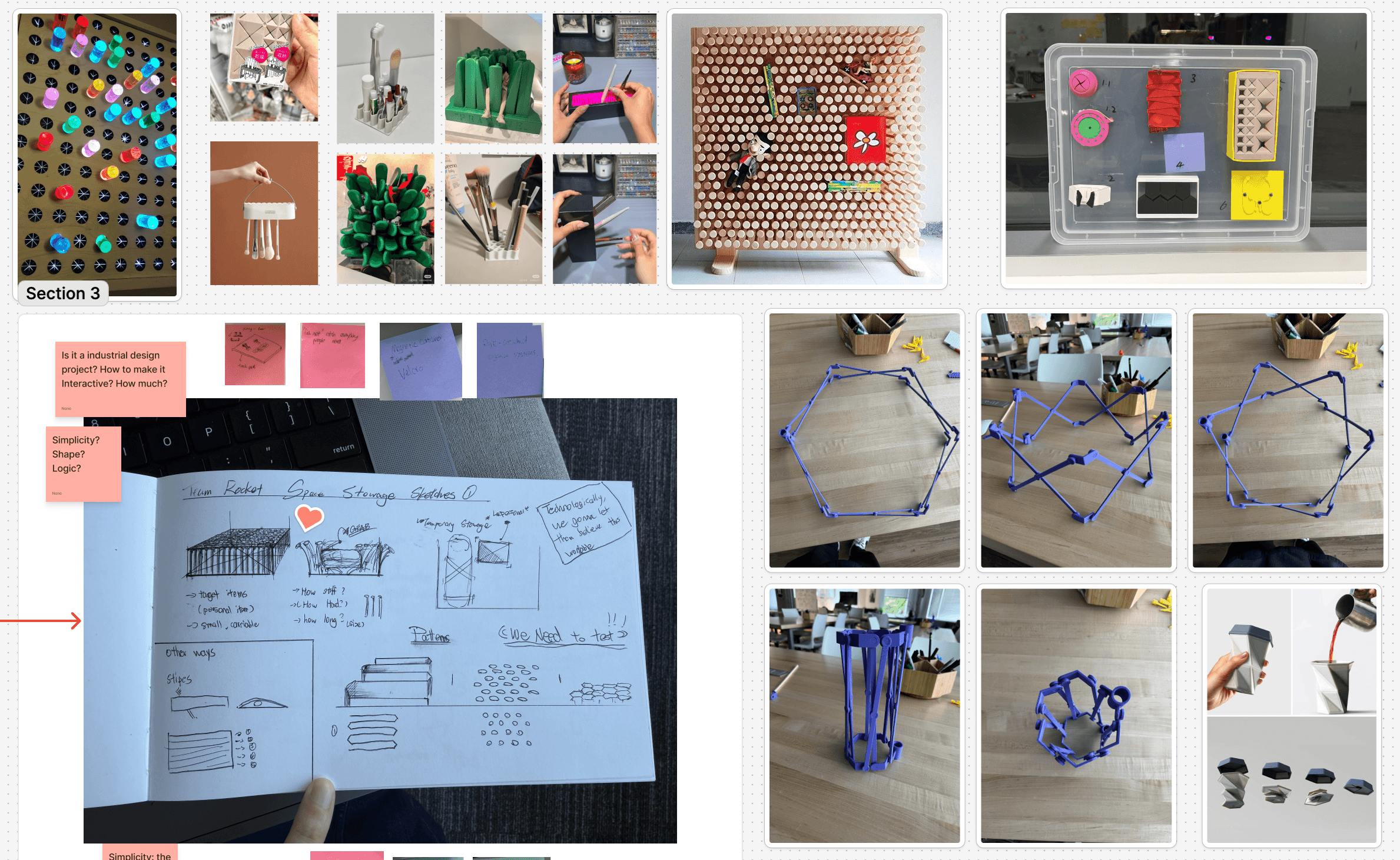
That reframing changed our design direction. Instead of designing another inventory or retrieval system, we explored transient stowage - a temporary workspace that could travel with an activity. I helped shape this shift from object-centric storage toward temporary organization, where tools become spatially connected through the work they support. This led us to define four key moments in the object's lifecycle: Establish, Pause, Share, and Reconcile. The goal was no longer simply to secure an object, but to preserve the state of unfinished work so that an astronaut - or another crew member could understand what was happening when they returned.
Networked Expandable Terminal
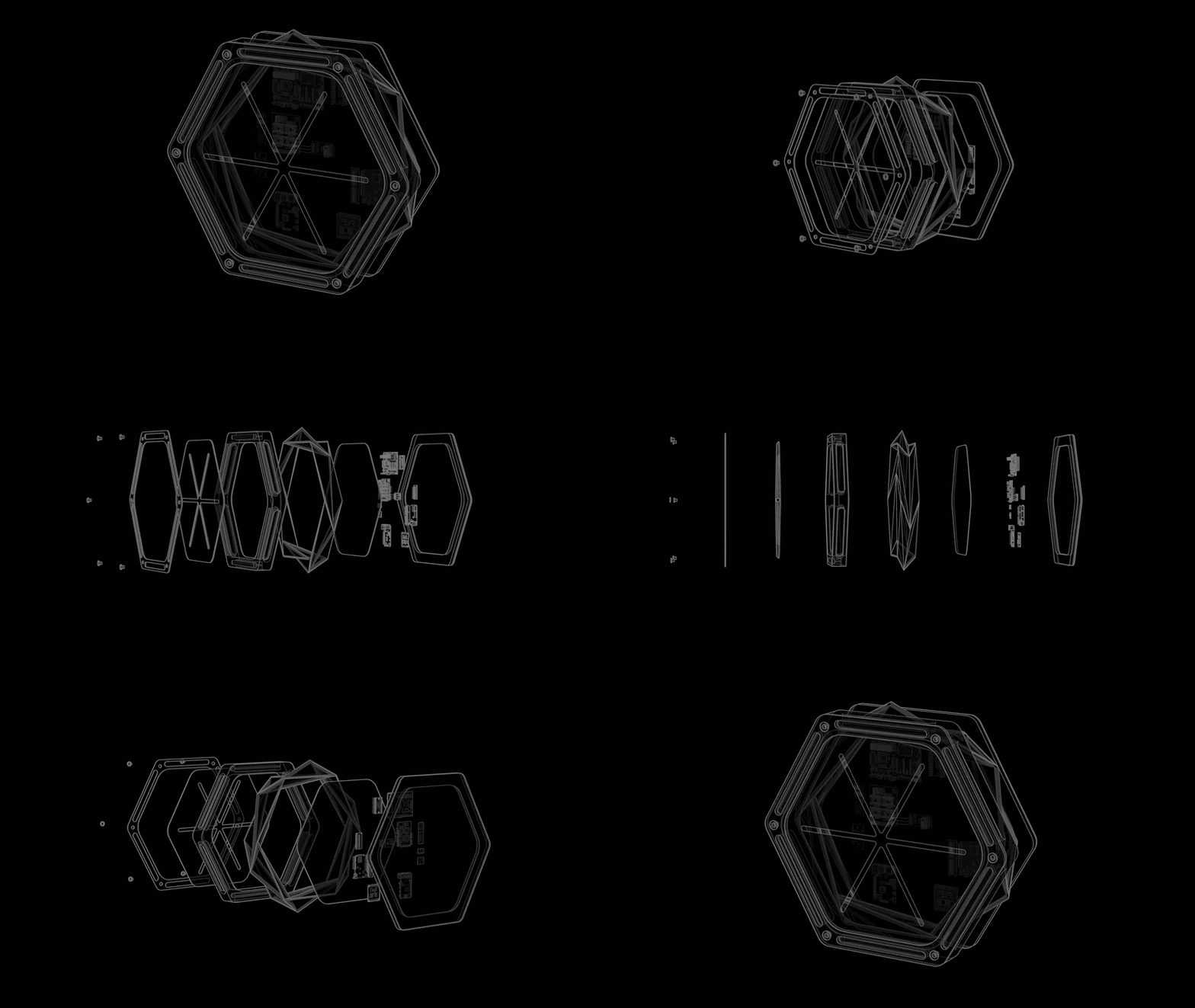
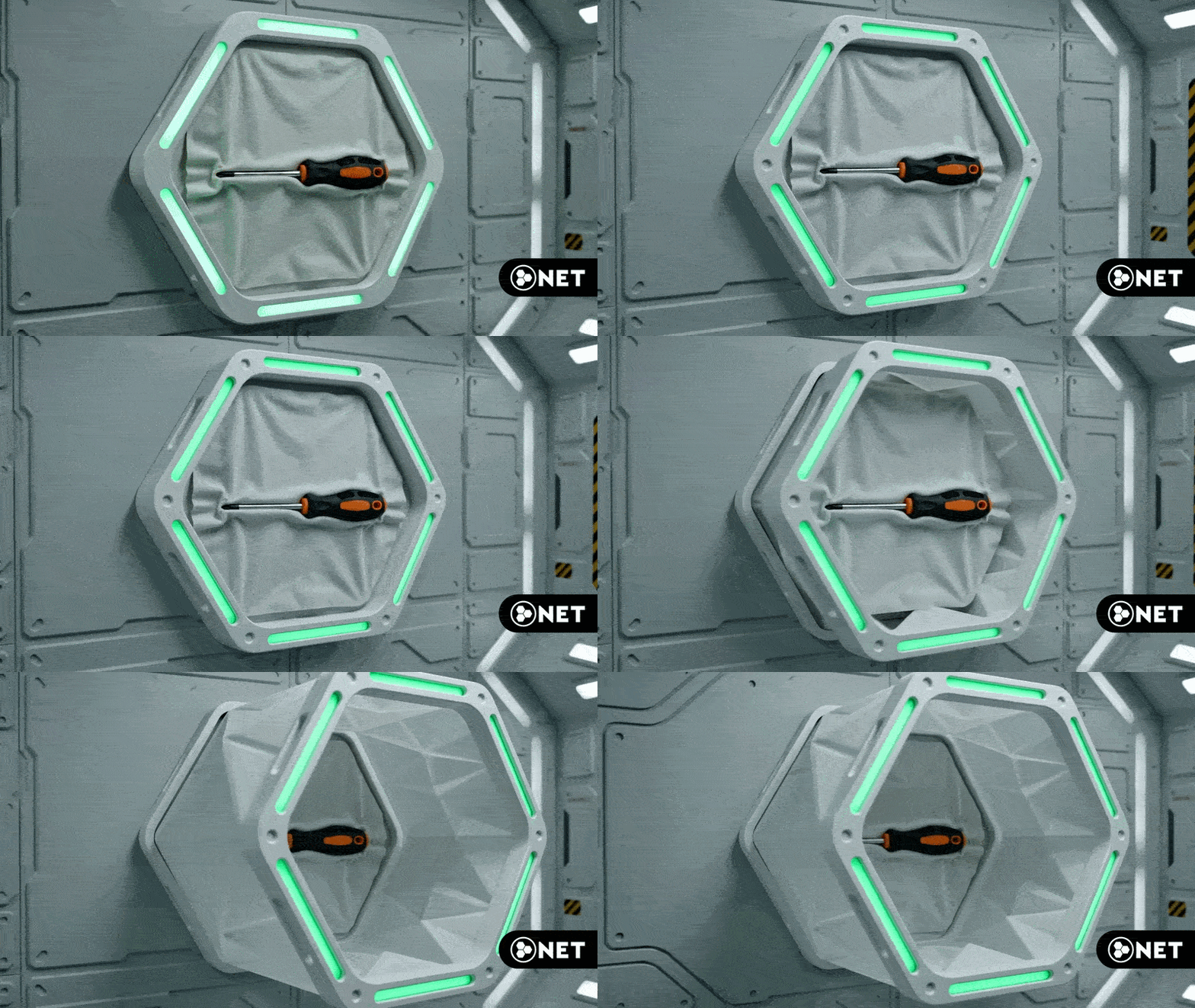
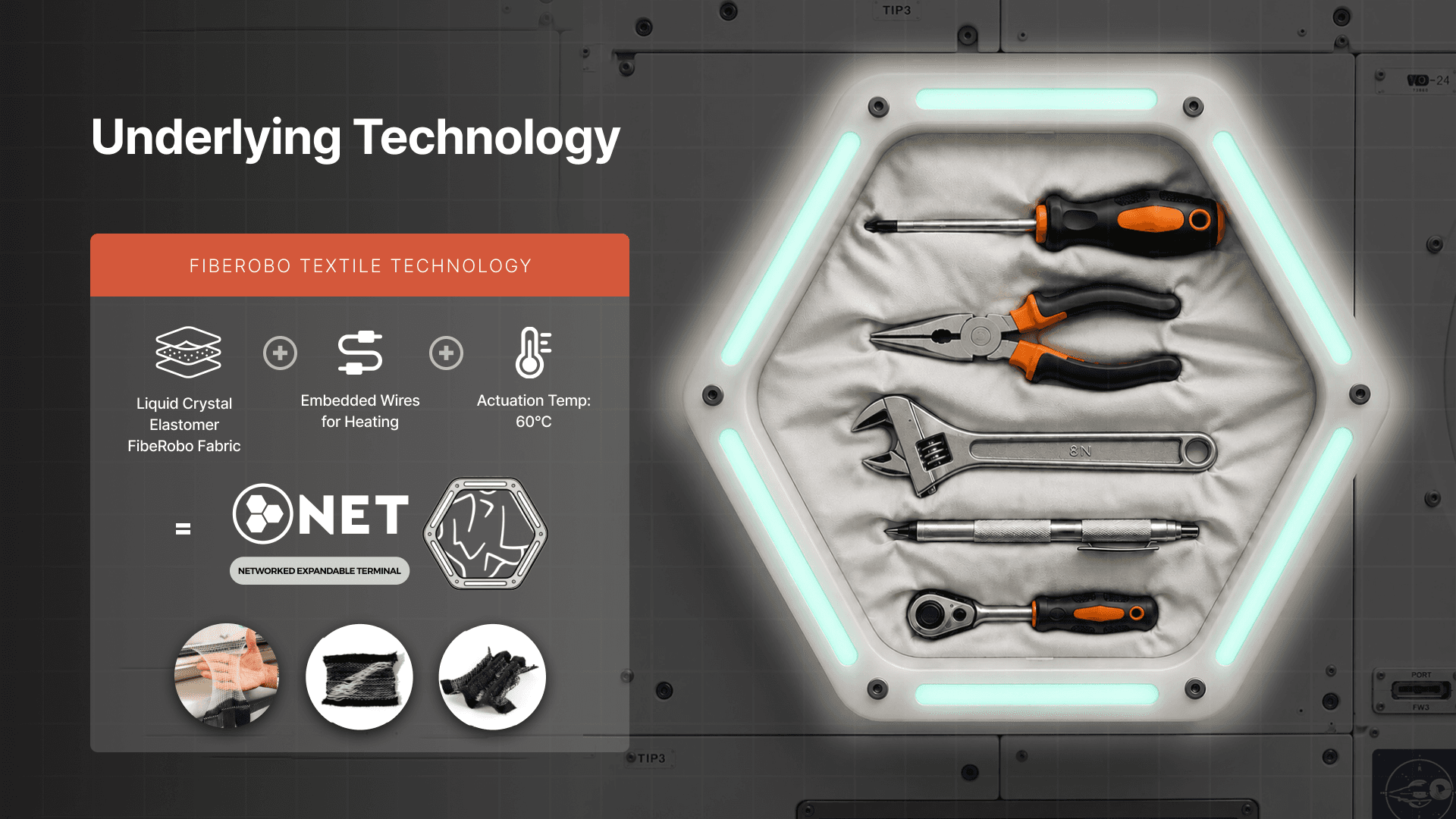
From there, we explored how that temporary workspace could physically adapt to different objects without requiring a dedicated holder for every tool. I contributed to the development of N.E.T. (Networked Expandable Terminal), a modular stowage surface combining a space-grade silicone frame, adaptive FibeRobo textile, sensing, and passive status indication. Its hexagonal form supports omni-directional interaction and modular tessellation, while the expandable textile conforms to different objects and enables one-handed access. Rather than forcing astronauts to organize around the storage system, N.E.T. was designed to adapt to the way work actually happens.
System Architecture
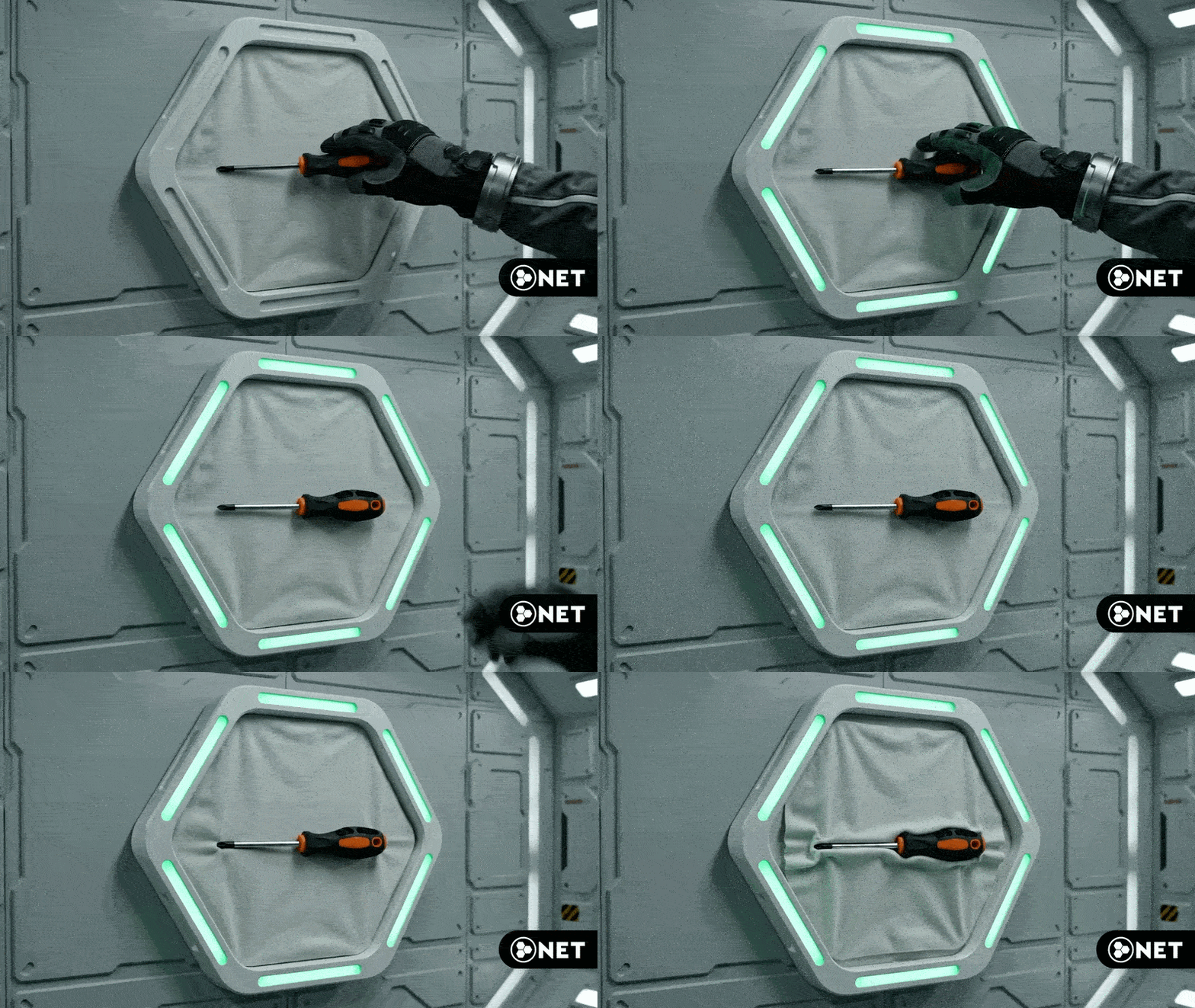
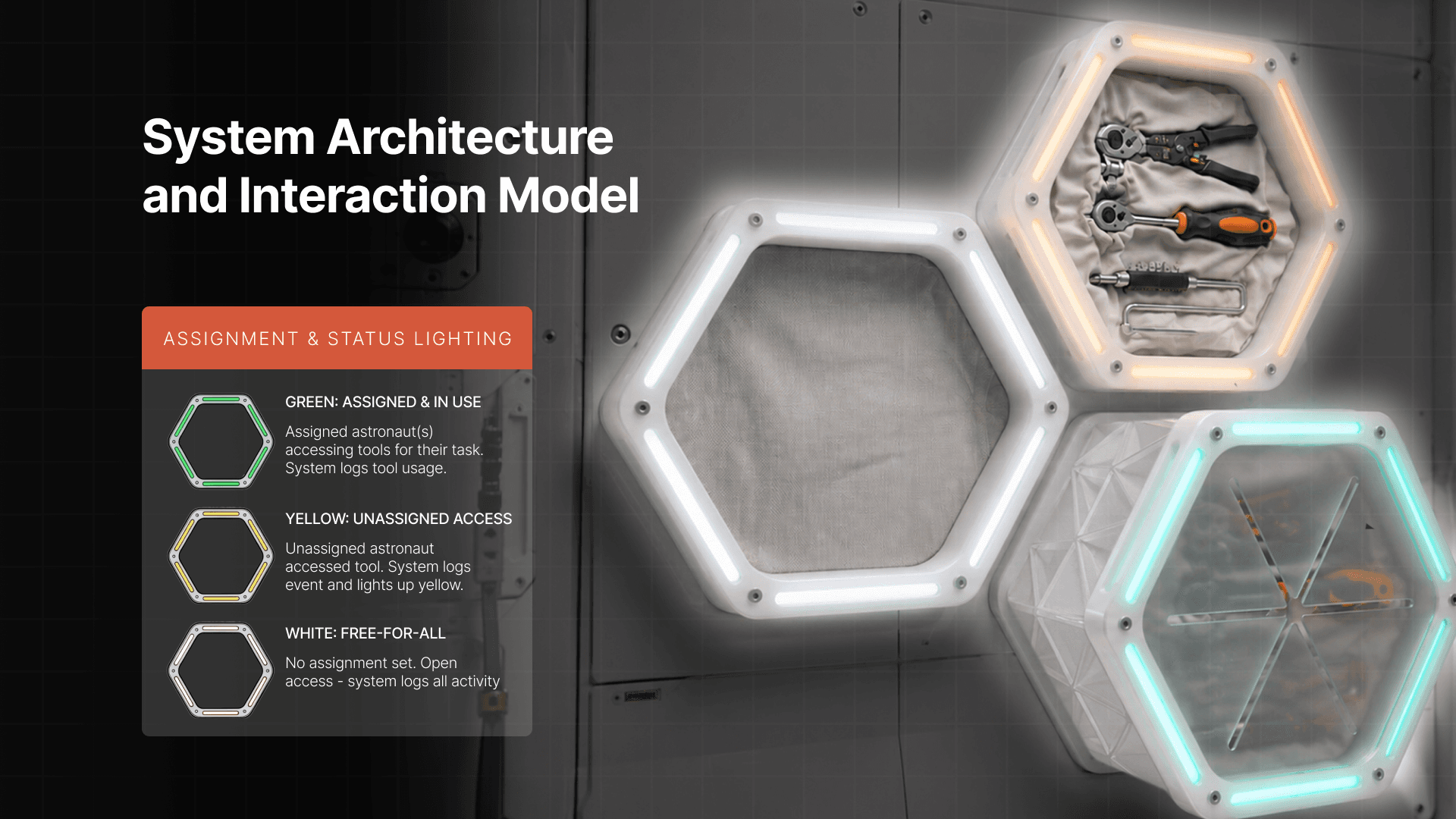
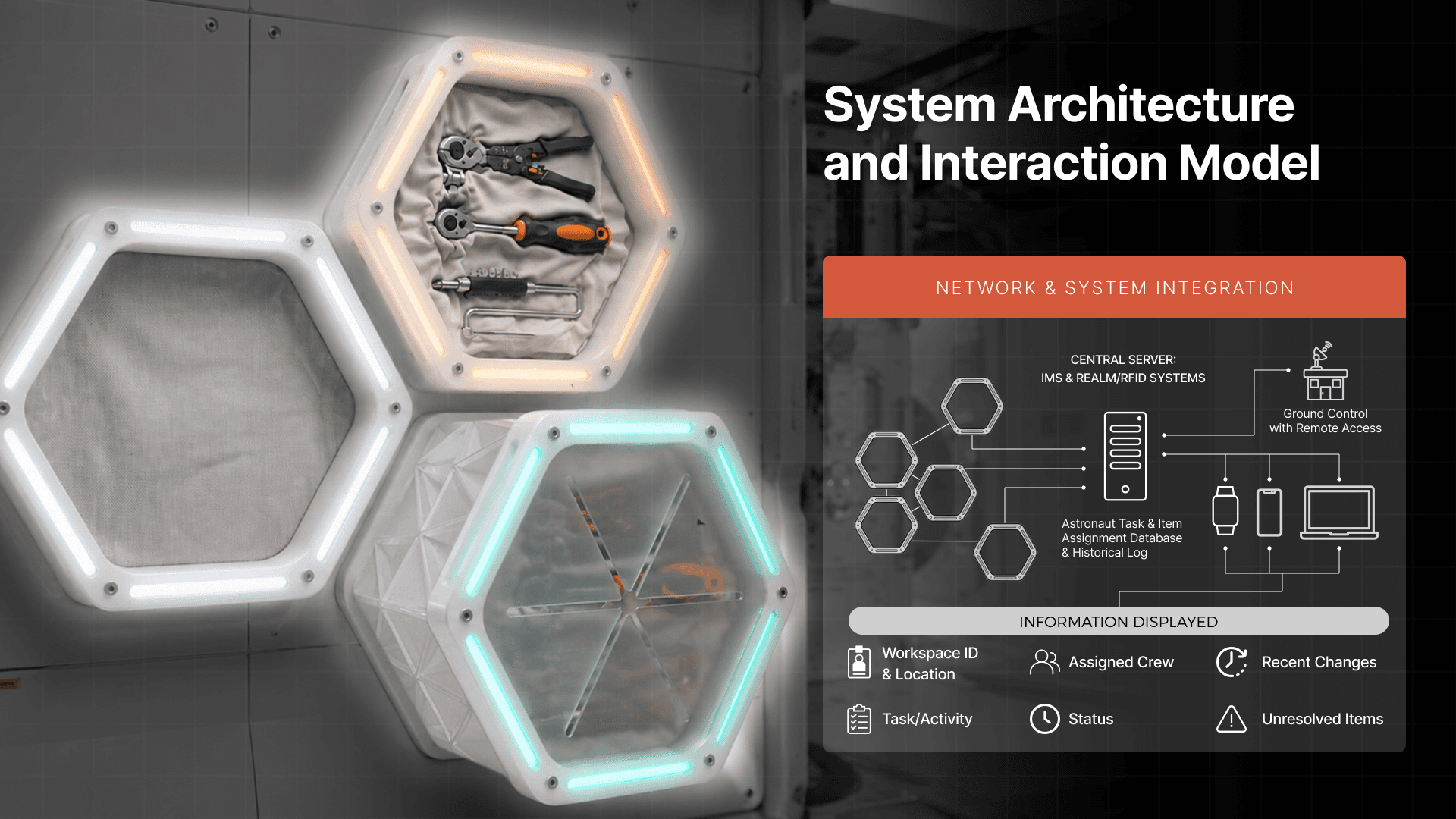
We then connected the physical system to a digital layer that could make changes to the workspace legible. Instead of simply reporting that an object was missing, the system distinguishes between an accounted-for change - such as a tool being intentionally moved to another task - and an unresolved change that requires attention. This became an important design principle: tracking should happen passively within natural workflows rather than becoming another administrative task for crew members.
Evaluation
Because we could not fully replicate microgravity or long-duration crew workflows, we separated what we could physically validate from what required expert evaluation. We tested form, retention, access, and one-handed interaction through physical prototypes, while using scenario walkthroughs and expert feedback to evaluate workflow plausibility, state legibility, and the Establish → Evolve → Reconcile lifecycle. A space habitat designer from Blue Origin specifically noted that they could see N.E.T. fitting into current ISS workflows while remaining relevant to future spacefarers.
Future Outlook
Our N.E.T. design concept transforms stowage into a responsive, reconfigurable device for items and objects. As Liquid Crystal Elastomer and FibeRobo textiles advance and mature, we see potential in other sizes and form factors to fit future stowage needs in space, both small and large. We hope this idea is a small step in the advancement of space stowage, especially as the commercialization of space pushes humanity towards the moon and beyond.