
The Invisible Killer
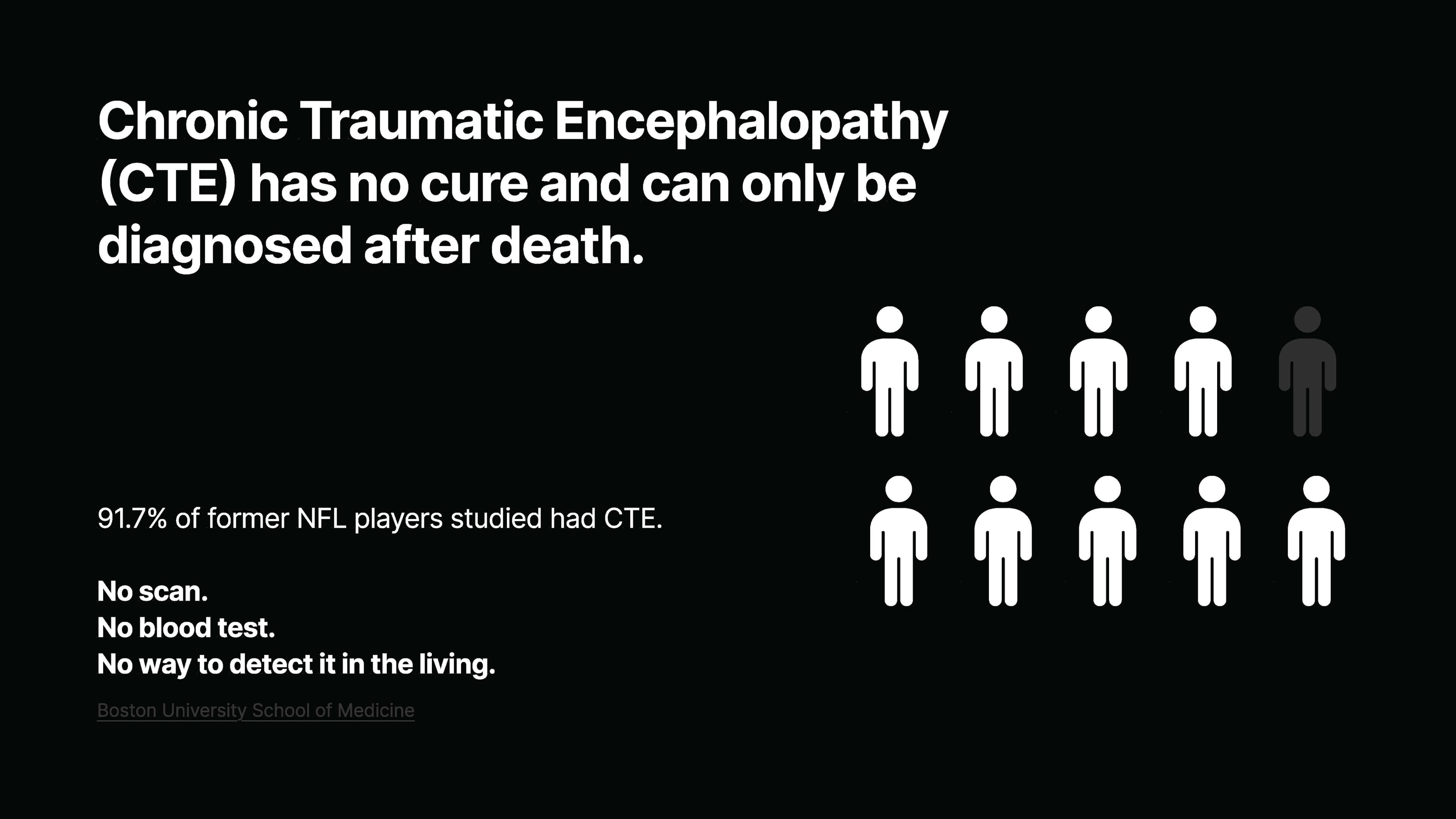
Football players absorb thousands of hits throughout their careers, yet the long-term neurological damage caused by repeated impacts often remains invisible until it is too late. As our team explored the growing crisis around CTE and sports-related brain trauma, I became interested in the disconnect between the massive amount of impact data being collected and the limited tools available to actually support sideline medical decisions. Most evaluations still rely on visible symptoms and quick judgment calls, even though brain damage accumulates silently long before symptoms appear. Because of this, we reframed the problem from simply tracking impacts to a more urgent question: how might we help medical staff see invisible neurological risk in real time?
NeuraLyfe
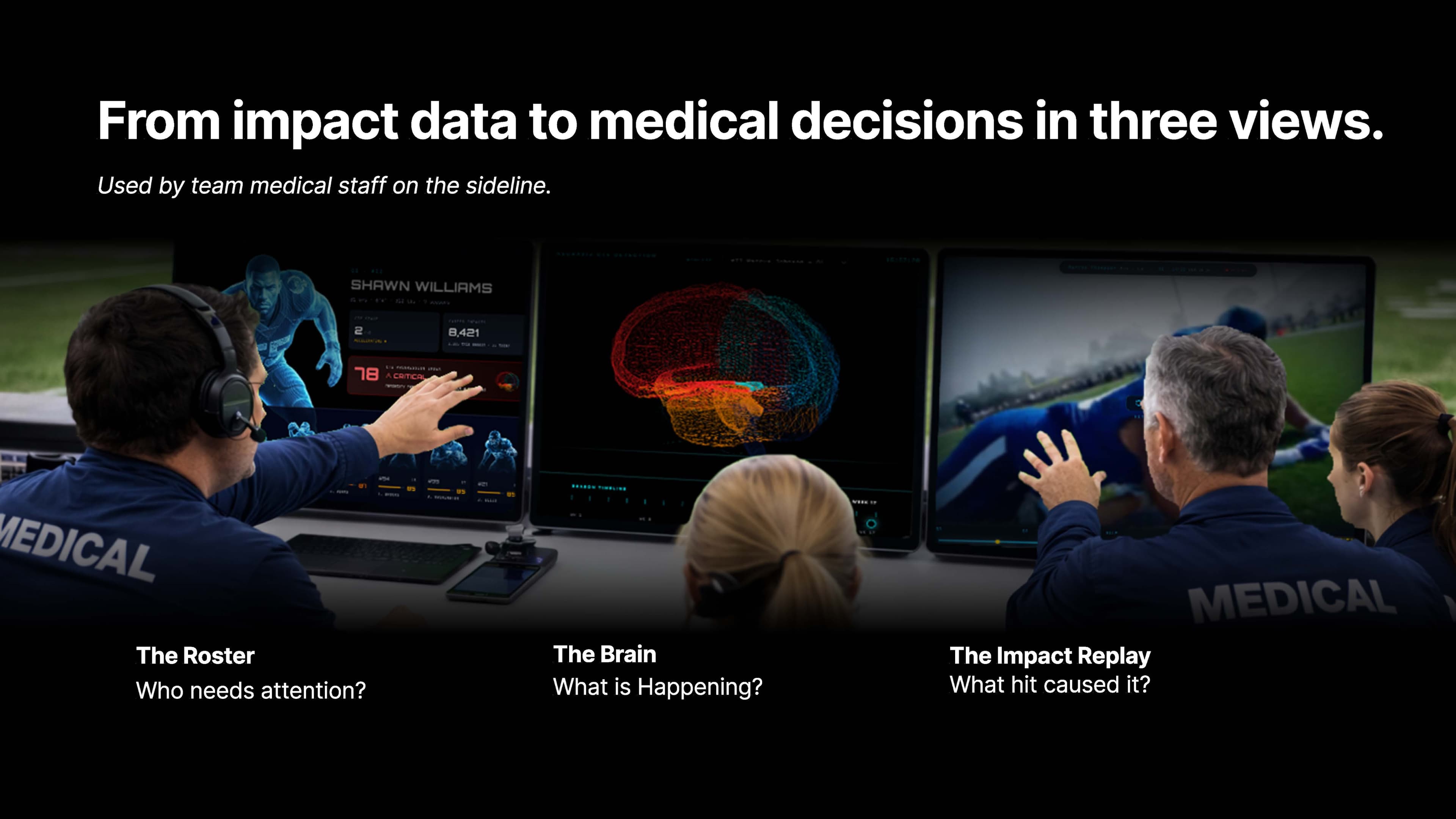
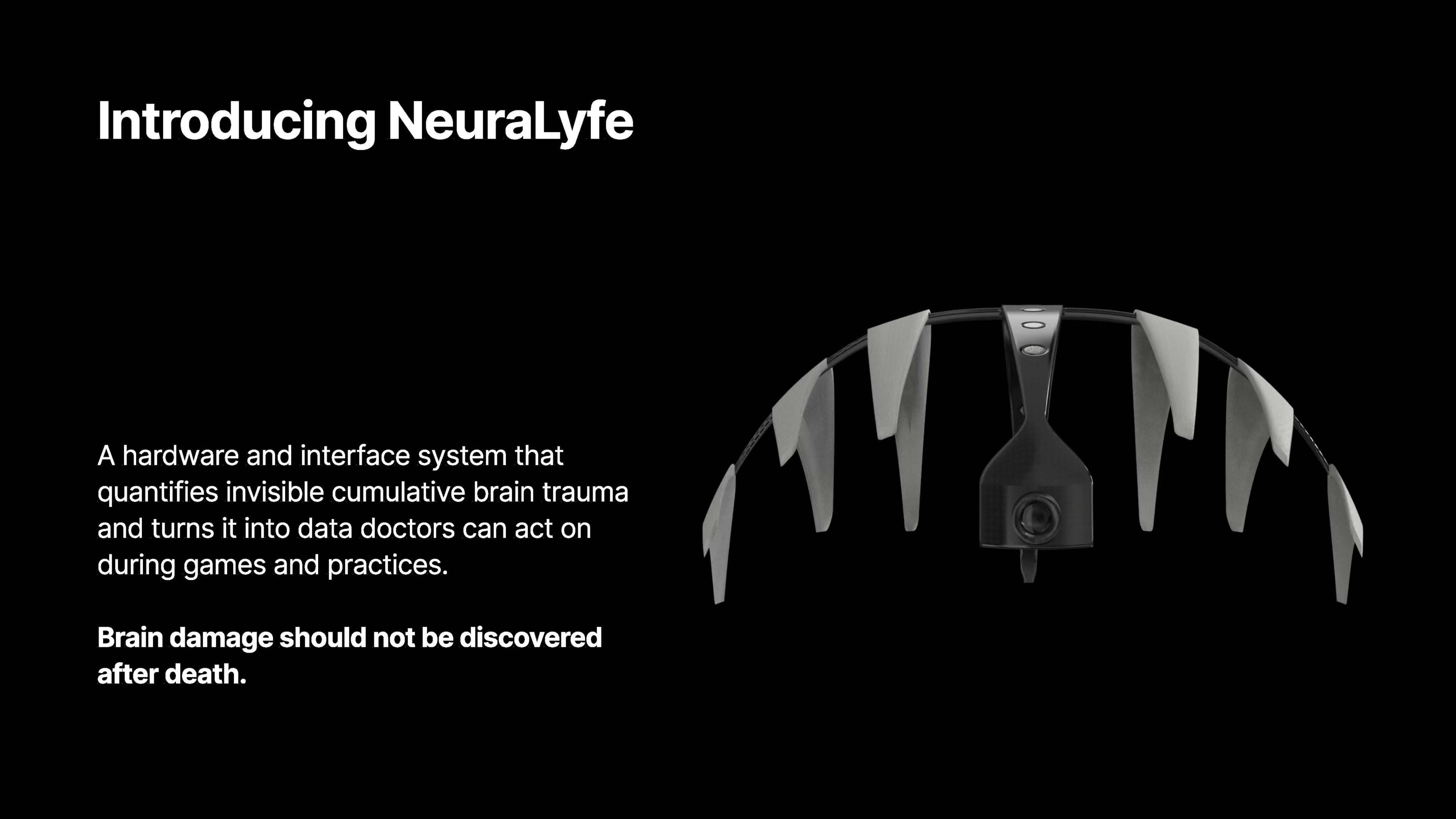
This shift led us to create NeuraLyfe, a speculative medical decision-support system that translates football helmet sensor data into actionable neurological insights. Early in the process, I helped define the core interaction model around the reality of sideline decision-making: medical staff only have seconds to evaluate players under pressure. Because of this, I pushed for a system centered on clarity and prioritization rather than raw data visualization. We organized the experience into three connected views - Roster, Brain, and Impact Replay. Each view was designed to answer a different medical question quickly: Who is at risk? What part of the brain is affected? Which hit potentially caused it?.
Challenges
As we moved into prototyping, we realized one of our biggest challenges was translating highly abstract neurological information into interfaces that felt intuitive at a glance. I contributed to simplifying how cumulative damage, brain stress, and impact severity were visualized, focusing heavily on hierarchy, readability, and interaction speed. Instead of overwhelming users with biomedical complexity, we designed visual systems that surfaced urgency immediately while still allowing deeper investigation when needed. This thinking shaped everything from the player risk rankings in Roster View to the 3D neurological heat mapping in Brain View.
A Speculative System
To bring the concept to life, we built an interactive prototype in Figma and Figma Make that simulated a live sideline workflow. The system aggregated simulated helmet sensor data into player risk scores, neurological visualizations, and replayable impact events tied back to specific plays. I helped shape the end-to-end experience so the prototype functioned less like a static concept and more like a cohesive real-time monitoring system.
The videos below show a rendered concept animation, a roster view prototype, a brain visualization prototype, and an impact replay with field context prototype.
See it in action:
Result
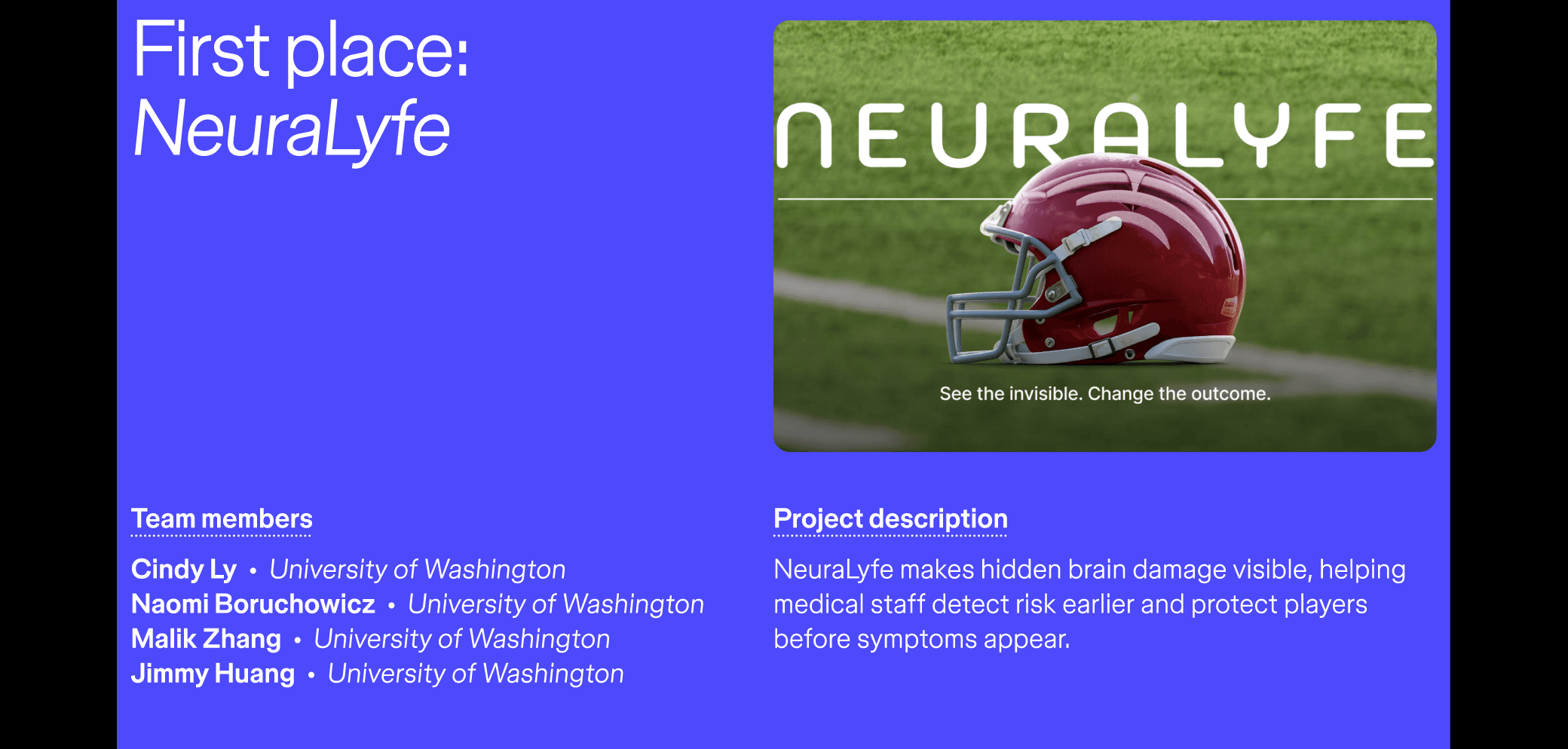
The project ultimately won 1st Place at FigBuild 2026, validating both the strength of the concept and the clarity of the interaction design. It was later featured by the University of Washington MHCI+D Program as part of their student showcase. More importantly, the project reinforced my interest in designing systems that make hidden problems visible - using interaction design not just to display information, but to fundamentally improve how people make critical decisions under pressure.
Reflection
Invisible problems require visible systems. Brain injuries often accumulate silently, making them difficult to detect through symptoms alone. Designing systems that surface hidden risk can fundamentally change how medical decisions are made.
Clarity is critical in high-pressure environments. Medical staff only have seconds to evaluate players. We learned that medical interfaces must prioritize clear signals and visual hierarchy over complex data.
Interaction design can bridge complex science and real-world action. By translating neurological signals into intuitive visualizations, design can help transform raw sensor data into meaningful decisions.
Proactive health monitoring is the future of sports medicine. Instead of reacting to visible injuries, systems like NeuraLyfe could enable earlier detection and prevention of long-term brain damage.